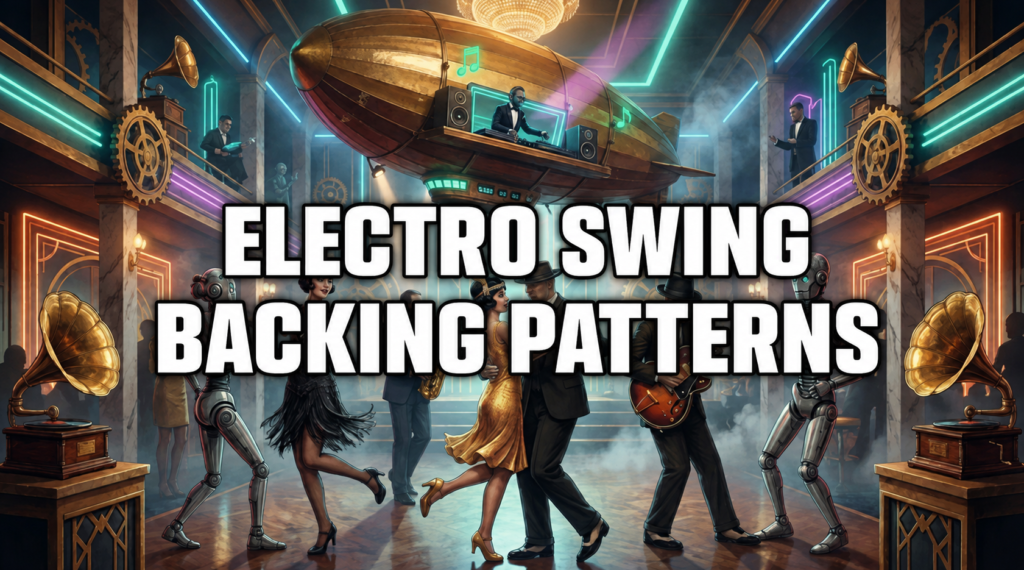
“What kind of backing patterns should I use for electro swing?”
If you have ever wondered about this, this article will show you how to create effective backing patterns—or accompaniment—for electro swing.
Backing refers to the chordal and rhythmic parts that support the main melody.
Adding backing patterns that work well with electro swing can instantly make your track sound more authentic.
In this article, we will look at commonly used piano, guitar, and brass backing patterns, complete with MIDI examples.
This website is gradually being translated into English, so some pages are still available only in Japanese. More English content will be added over time. Please bookmark this site and check back for updates. I hope you’ll find it useful for your music production.

I’m a composer, arranger, and music production instructor specializing in electro swing and jazz. My work includes music composition, arrangement, mixing, and event production. A commercial song I worked on won the Music Award at the Yamagata Furusato Commercial Awards. My collaboration with zensen and Anshelly, “Oshare ga Shitai wa,” has surpassed 450,000 views on YouTube.
🎹 Piano

Basic Pattern
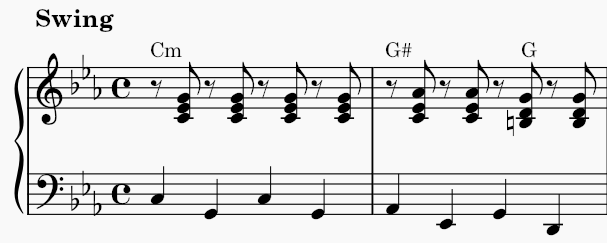
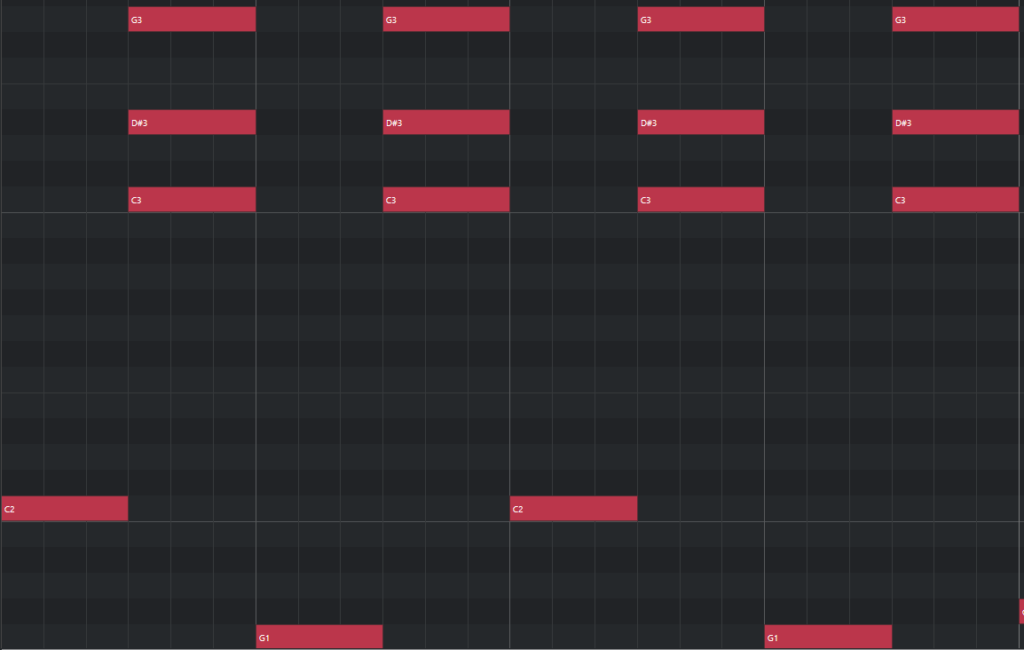
One of the most common accompaniment patterns in electro swing is the classic “oom-pah, oom-pah” rhythm, which emphasizes the offbeats.
The basic structure is:
- On-beats: Bass notes—the root or fifth
- Offbeats: Chords
The bass note on the first beat is usually the root.
🎧 Preview
If you would like to study the pattern on your computer, you can download both the MIDI and audio files.
🎼 Notation
💻 MIDI
Pattern with Syncopation
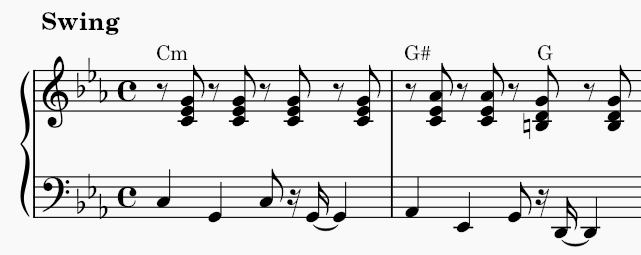
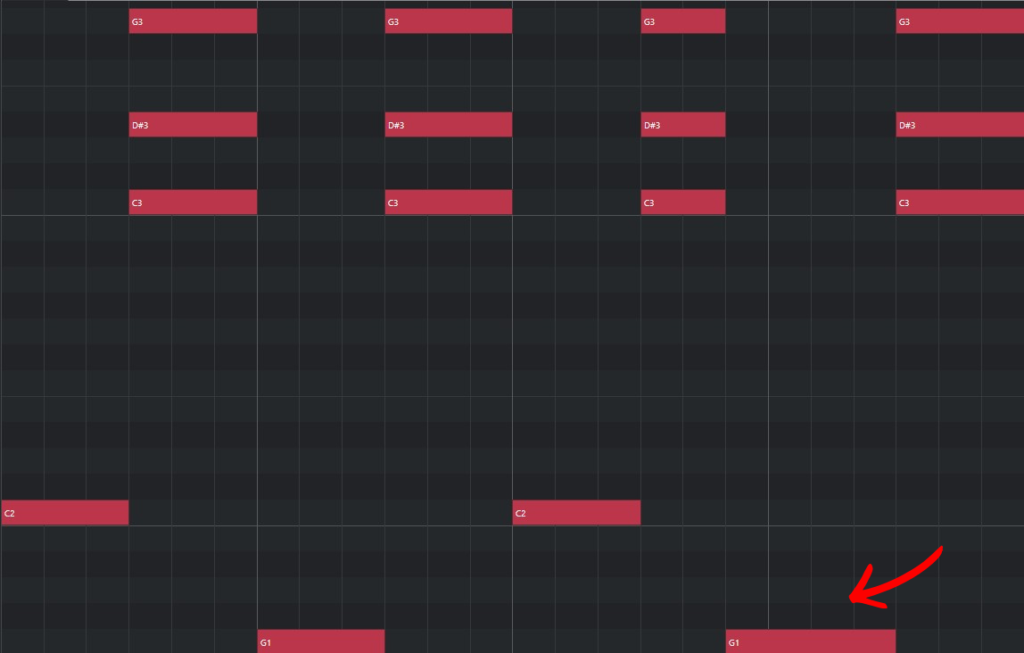
Syncopated variations are also commonly used. These patterns slightly shift the timing of the offbeat chords from the basic pattern.
This gives the accompaniment more forward momentum and creates a stronger jazz feel.
🎧 Preview
If you would like to study the pattern on your computer, you can download both the MIDI and audio files.
🎼 Notation
💻 MIDI
All-Chord Pattern on Both On-Beats and Offbeats
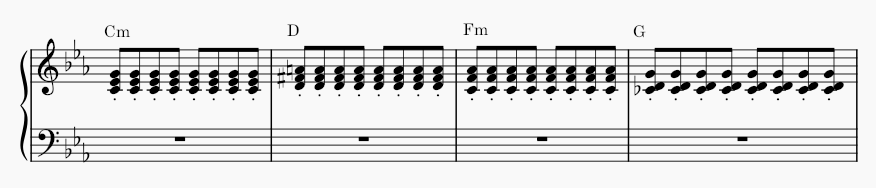
Another option is to play full chords on both the on-beats and offbeats.
This pattern can be difficult to use as the main accompaniment throughout an entire track, but it is effective when used selectively to add variation.
🎧 Preview
If you would like to study the pattern on your computer, you can download both the MIDI and audio files.
🎼 Notation
💻 MIDI
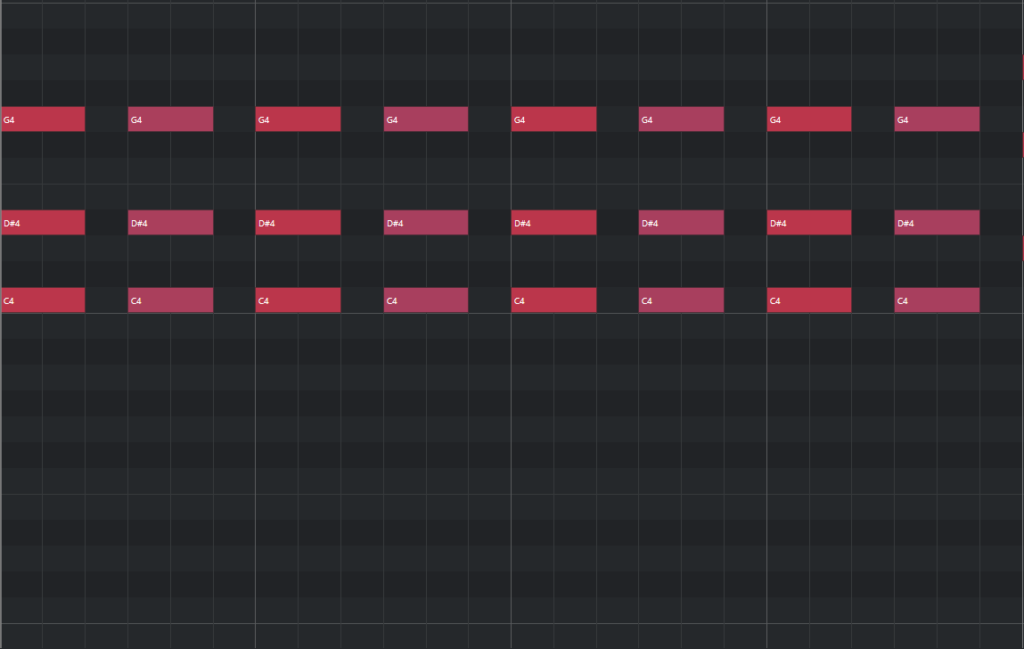
This pattern works particularly well in half-time sections.
Song example:
Mu THE MOON – “Megumi no Hito”
B section from 0:39

🎸 Guitar

Gypsy jazz-style guitar accompaniment is another classic element of electro swing.
The basic rhythmic structure is:
- On-beats: Muted strums
- Offbeats: Chord strums
🎧 Preview
If you would like to study the pattern on your computer, you can download both the MIDI and audio files.
🎼 Notation
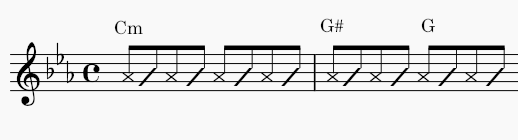
Using a gypsy jazz guitar library can instantly give your track a more authentic sound.
The preview above uses the guitar backing sound from Gypsy Jazzy. Please note that Gypsy Jazzy has now been discontinued.
DJANGO is another recommended option for guitar backing.
If you would like to study the pattern on your computer, you can download both the MIDI and audio files.
👉 Learn more about recommended software instruments in this article:
👉 You can also see the software and equipment used in my production setup here:
🎷 Brass

Basic Pattern
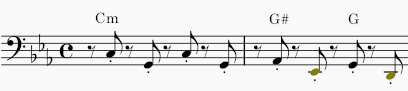
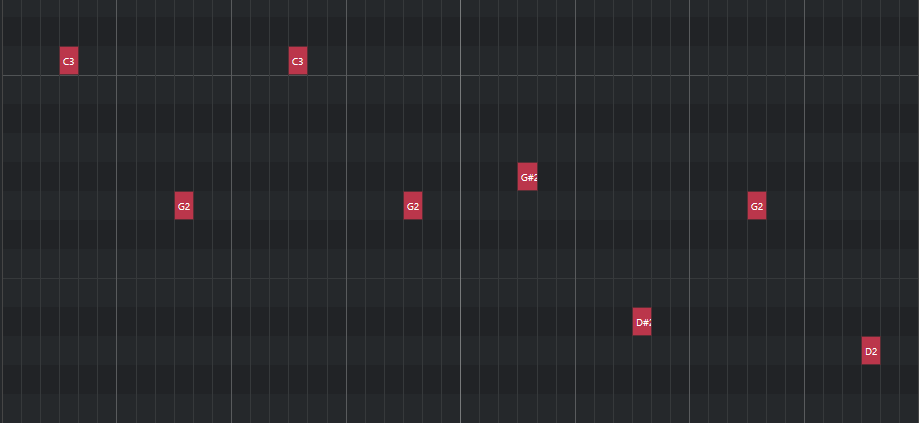
Brass backing in electro swing does not always use the thick chord voicings typically associated with big bands.
Instead, it often uses:
- Mainly single notes, especially the root and fifth
- Short rhythmic hits centered on the offbeats
🎧 Preview
If you would like to study the pattern on your computer, you can download both the MIDI and audio files.
🎼 Notation
💻 MIDI
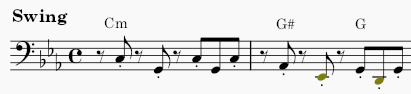
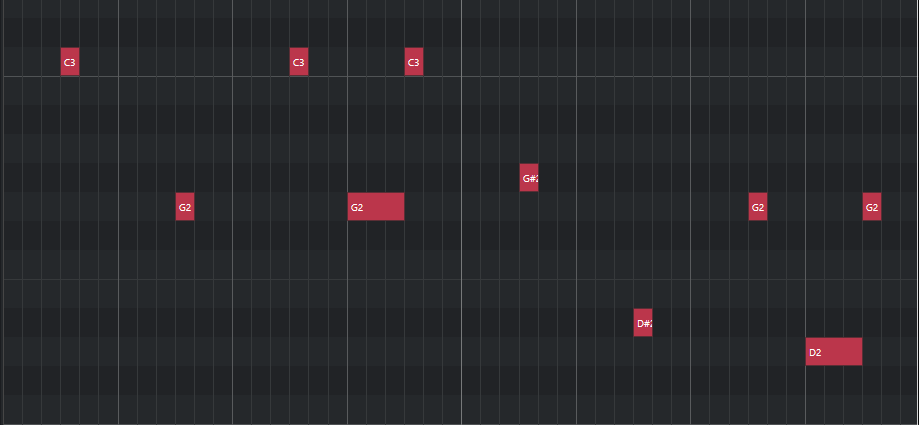
Variation Combining On-Beats and Offbeats
Although brass backing is usually centered on the offbeats, adding occasional root or fifth notes on the on-beats can also be effective.
This creates rhythmic accents and prevents the pattern from becoming repetitive.
🎧 Preview
If you would like to study the pattern on your computer, you can download both the MIDI and audio files.
🎼 Notation
💻 MIDI
On-Beat-Focused Pattern
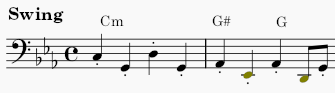
Some brass backing patterns focus mainly on the on-beats rather than the offbeats.
You can switch between these approaches depending on the groove and the section of the track.
🎧 Preview
If you would like to study the pattern on your computer, you can download both the MIDI and audio files.
🎼 Notation
💻 MIDI
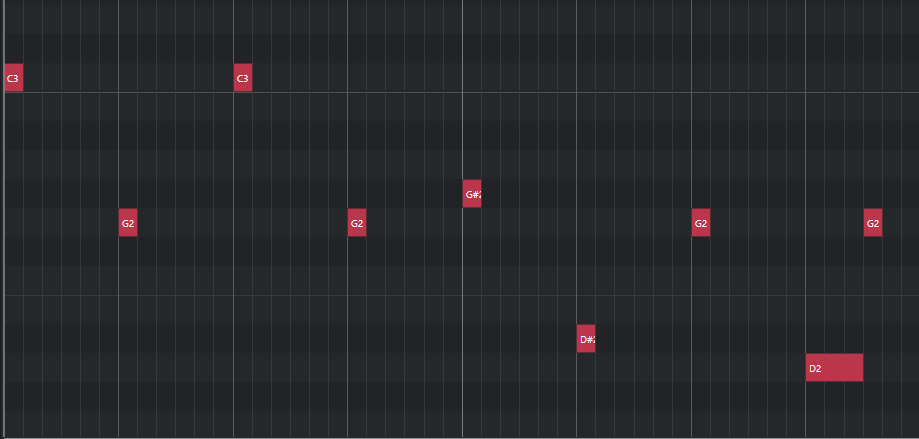
Song example: “Room501” by Anshelly uses an on-beat-focused brass backing pattern.

🎵 About Chord Progressions
This article focuses on backing patterns, but I also cover common chord progressions used in electro swing in a separate article.
👉 Essential Electro Swing Chord Progressions
📝 Conclusion
Electro swing accompaniment is generally built around rhythmic patterns that emphasize the offbeats.
Piano
On-beats: Root or fifth
Offbeats: Chords
Guitar
On-beats: Muted strums
Offbeats: Chord strums
Brass
Mainly single-note figures using the root and fifth
Reinforces the rhythm, often with offbeat accents
Combining these patterns creates the light, bouncy groove and jazzy feel that make electro swing so distinctive.
Struggling to Make Progress on Your Own?
You may be experiencing problems such as:
- “My tracks never sound as cool as I imagined.”
- “I can’t quite capture the electro swing sound.”
- “I feel I’ve reached the limit of what I can learn on my own.”
For those facing these challenges, I offer one-on-one online music production lessons.
Creating an authentic electro swing track requires an understanding of sound selection, rhythm, arrangement, effects, and several other important techniques.
Without that knowledge, it is only natural that endless trial and error may not bring you closer to the sound you have in mind.
I experienced the same problem myself.
When I insisted on teaching myself, I managed to complete only one track in four years.
Looking back, even that track was nowhere near a level I would have felt comfortable sharing with other people.
After learning proper arrangement techniques and music production methods from a teacher, I began to understand how sounds, chords, rhythms, and other elements could be combined to create the sound I wanted.
Today, I analyze electro swing and write detailed production guides like this one. I also compose and arrange music for artists and companies.
If you want to develop the right knowledge, create the music you truly have in mind, and captivate listeners and fans with your work, please take a look at the details of my online lessons.
Students from Japan, the United States, Austria, and other countries take part in these lessons—from complete beginners to aspiring professionals.
[View the Online Music Production Lesson Details]

🎁 Free Brass Backing MIDI for Newsletter Subscribers
The brass backing MIDI files featured in this article are available exclusively to newsletter subscribers.
The newsletter includes:
- Production techniques not covered on the blog
- Behind-the-scenes insights into electro swing production
- Practical MIDI resources you can use in your own tracks
If you would like to expand your production toolkit, sign up below and receive the free MIDI files.
👉 [Subscribe to the newsletter and receive the free downloads]

🎧 Want to Go Deeper Into Electro Swing Production?
For a complete overview covering bass, chords, rhythm, and instrument selection, see the following guide:
👉 The Complete Guide to Making Electro Swing
Bookmark this page so you can return to these patterns whenever you need them during production.